
Fire Door Fitting Norfolk | SAB Group
Fire Door Fitting with SAB Group in Wymondham, Norfolk
View More
Understand the condition of your fire doors, identify defects early, and stay compliant with expert fire door inspections from SAB Group. We carry out detailed fire door inspections across Norwich and Norfolk, helping businesses, landlords, and property managers manage risk and maintain effective passive fire protection.
SAB Group provide specialist fire door inspections as part of wider passive fire protection and compliance support.
Fire doors are a critical life safety measure, but their performance depends on the condition of the full assembly. Damage, poor installation, missing components, wear, unsuitable repairs, and unauthorised alterations can all prevent a fire door from performing properly in the event of a fire.
A professional fire door inspection gives you a clear and structured assessment of each fire door’s condition, compliance, and serviceability. It allows defects to be identified early, remedial actions to be planned properly, and duty holders to demonstrate that fire door safety is being taken seriously.
Contact us today!C20+ Years’ Experience
Our Reviews
Fire door inspections are one of the most important proactive steps a business can take to support fire safety compliance. They help determine whether fire doors are likely to perform their intended role: resisting the spread of fire and smoke, protecting escape routes, and supporting compartmentation within the building.
Without inspection, defects often go unnoticed until they become serious. A fire door may appear acceptable during everyday use while still failing on critical safety points such as certification, clearances, self-closing, latching, seals, ironmongery, glazing, or signage.
For businesses and responsible persons across Norfolk, regular fire door inspections provide the evidence needed to understand current condition, prioritise remedial works, and maintain confidence in the building’s fire door strategy.
Fire door inspections are important because they help you move from assumption to evidence. Instead of relying on appearances, you gain a door-by-door understanding of defects, risks, and compliance issues.
This is especially important where buildings have:
A thorough inspection helps your business to:
A competent fire door inspection looks at whether the fire door assembly is complete, serviceable, and likely to perform as intended.
SAB Group’s fire door inspections include a detailed assessment of key criteria such as:
We provide a full report for each fire door, including photographs of defects and clear findings to support remedial decision-making. This gives clients a practical record of condition, risk, and the actions required.
Routine visual checks can be carried out in-house by a facilities manager, fire warden, fire marshal, or another competent person as part of day-to-day fire safety management. However, formal fire door inspections should be carried out by a suitably qualified specialist with the technical knowledge to assess compliance, compatibility, and performance-related defects properly.
This distinction matters. A specialist inspection is not simply about spotting visible damage; it is about understanding the door as a certified fire-resisting assembly and knowing what may invalidate or undermine that performance.
SAB Group carries out fire door inspections to recognised industry standards, helping clients understand exactly where attention is needed.
Inspection frequency depends on the type of premises, the number and type of fire doors, the risk profile of the building, and how heavily the doors are used.
As part of a sensible fire safety strategy, regular in-house monthly checks are good practice for identifying obvious defects and misuse. In multi-occupied residential buildings in England above the relevant threshold, the Fire Safety (England) Regulations 2022 introduced specific requirements for checks to communal fire doors and flat entrance doors.
Formal specialist inspections should also be scheduled at suitable intervals, particularly in higher-risk buildings, after refurbishment works, following damage reports, or where there are concerns over compliance or condition.
Fire door inspections often reveal issues that can seriously affect performance, even where the door appears serviceable at first glance.
Common defects include:
These findings are important because even relatively small defects can compromise the tested performance of the fire door assembly.
Fire door inspections sit within the wider legal framework governing fire safety in buildings.
The Regulatory Reform (Fire Safety) Order 2005 requires fire precautions to be properly maintained and places duties on the Responsible Person to manage fire safety risks appropriately. The Fire Safety Act 2021 further strengthened responsibilities relating to fire safety in relevant residential settings.
The Fire Safety (England) Regulations 2022 also reinforced the need for regular checks on fire doors, including ensuring self-closing devices are working and doors are in efficient working order and good repair.
In practical terms, inspection is one of the clearest ways to demonstrate that fire doors are being actively managed rather than assumed to be compliant.
Locate the certification label or plug on the door (typically found on the top edge), then verify that all components of the door match the certification document. Note: the label can be difficult to see sometimes!
The gap between the door and frame should be 2mm to 4mm at the top and sides, while the gap under the door should not exceed 10mm (or 3mm if smoke seals are required). Check that intumescent seals around the door or frame are intact and in good condition.
Make sure there are at least three hinges securely fitted with all screws intact and of the same size. Each hinge must have a CE mark and a fire identification stamp (such as a Certifire mark) matching the fire rating of the door. Hinges and ironmongery should be free from visible damage such as dents or missing screws.
Check that fire doors open and close smoothly without obstruction. Hinges and push bars should also operate without metal splinters or oil leaks, which may indicate wear. Crucially, the door closer must:
If an electronic hold-open device is installed, test its release function when the fire alarm sounds.
Inspect the fire door and frame for visible damage such as dents, holes, or missing pieces, and check veneered or lipped leaves are firmly glued in place. Any modifications, such as ventilation grilles, door furniture, or vision panels, must comply with manufacturer instructions, as unauthorised alterations can invalidate certification.
Fire doors should have the correct signage as per BS5499, clearly indicating their purpose. Signage may be required on both sides of the door to ensure visibility.
Keep emergency routes clear at all times, and make sure fire doors are never locked, fastened, or propped open. If hold-open devices are used, check they release when the fire alarm sounds. If you notice any incorrect use of fire doors (such as wedging doors open), we advise:
Performing these checks monthly will help ensure fire safety compliance and effective fire door performance in an emergency.
SAB Group combines practical site experience with specialist fire door knowledge. Our inspections are detailed, methodical, and focused on clear outcomes: identifying defects, supporting compliance, and helping clients plan the right next steps.
We inspect all types of fire doors, including FD30 fire doors, FD60 fire doors, internal fire doors, external fire doors, and fire door retainers. Every inspection is backed by clear reporting, photographic evidence, and a practical understanding of what is needed to restore and maintain compliance.
Fire door inspection courses are an excellent way of improving your business’s overall fire door safety and compliance with statutory fire door regulations. Fire door inspection courses come in a variety of shapes and sizes, such as the self-paced online UK Fire Door Training’s Fire Door Inspection Course and the Fire Protection Agency’s 3-day on-site Level 3 Award in Fire Door Inspection.
These paid courses, ranging from £500-£1,370, help you to improve your knowledge and secure your credentials as a Certified Fire Door Inspector for your business. Alternatively, at SAB Group we can save you the time, hassle, and price tag of a fire door inspection course with our cost-effective monthly fire door inspection and maintenance service. Contact us for more information.
Get in touchSAB Group provides expert fire door inspections that help businesses and property managers understand the condition of their fire doors, prioritise remedial works, and maintain robust passive fire protection across their premises.
Case studies
Want the same level of commercial property protection?
Fire Door Fitting with SAB Group in Wymondham, Norfolk
View More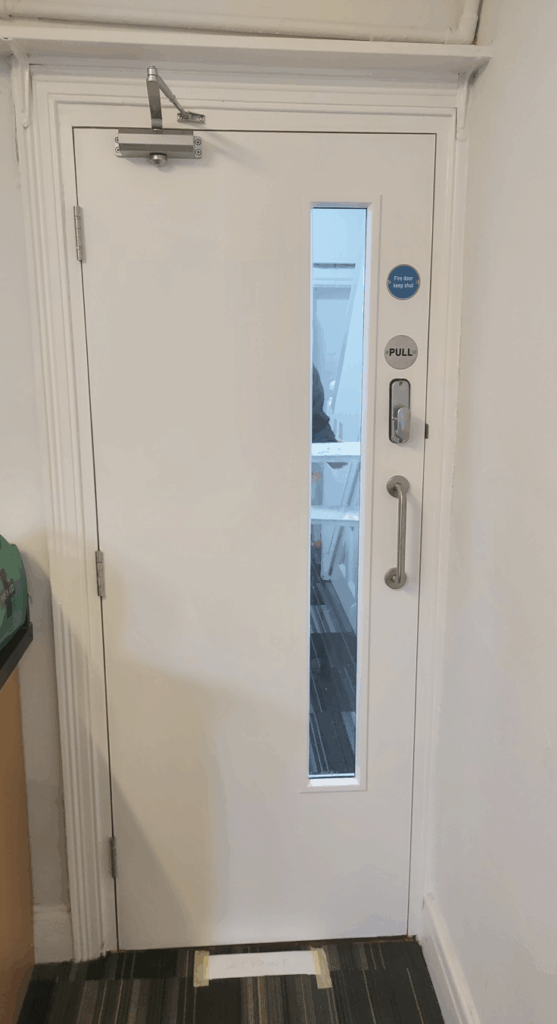
We take pride in delivering high-quality fire door solutions that make a real difference. From installation and inspections to maintenance and remedial works, our skilled team ensures every project is completed to the highest standard.
We’re here to help! Get in touch today – let's make your premises compliant

Call Us

Email Us

Address
Head Office:
SAB Group, Ground Floor, Vanquish House, Wellesley Road, Tharston, Norwich, NR15 2PD.
Workshop:
Richmond Close, Honingham, Norwich, Norfolk. NR9 5BP
