

Our Services

Here are SAB Group’s 10 Signs that Fire Door Damage is Irreversible in the UK. We will discuss how to assess fire doors, identify potential risks or dangers, and the determining factors on when you should replace a component of the fire door itself.
One way to check your fire door damage is irreversible is by looking for visible damage to the fire door leaf. The door leaf is the main body of the fire door, providing a heavier barrier material than most average doors, and you must check that it is intact in order to resist any fire. Cracks, holes, warping and splits in the door leaf can compromise the fire resistance, allowing fire to spread through and cause both danger to any building/surrounding people, and also further damage or compromise to the fire door itself. Along with this, any physical deterioration will often indicate that a fire door is unsafe and need replacement.
In order to check for any cracks or holes within the fire door, you must first assess the door and identify any surface-level cracks or deep splits in the wood, as this will definitely indicate significant damage.
Another way to check for cracks or holes is by inspecting any unusual, drilled holes in the surface of the wood, or other modifications that may indicate that the fire door material has been breached. If there are any holes or modifications, fire will be able to travel through them, damaging the door further and causing a hazard to anyone within the building if a fire spreads.
In order to check for warping or distortion of your fire door, you must first assess whether the door leaf (main body of the fire door protection) is bowed or twisted. You can do this by turning the door to its side and looking for curves in the wood, by lining it up with the frame or another flat object to see if it lays flat against it. Any unusual misalignment can prevent the fire door from properly sealing, allowing fire and smoke to cross into multiple rooms of a building and cause further harm to building members.
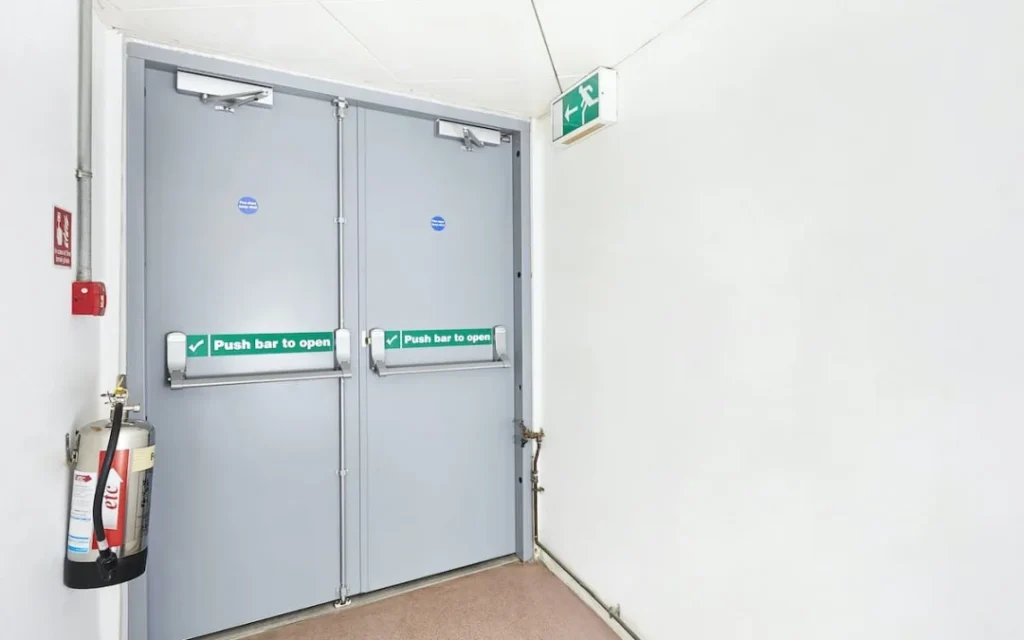
Another way to check for damage is to check the gaps around the fire door frame. For this, you will need to check the correct fitting of the fire door and frame, a critical step in reduction of fire risk and promotion of fire resistance. You also need to check for any excessive gaps that may allow smoke of excess fire to sneak through. Poor insulation may also be a root cause for fire door damage, wearing the door down and making it more dangerous to any users.
Excessive side or top gaps through the fire door clearly mark an unsafe environment for any building users, should a fire occur. In order to check this, you will need to measure the perimeter gaps around the door, making sure that they don’t exceed the limit of 3 to 4 millimetres. If the gap exceeds this number, there is a risk of danger to building users and further building damage.
Another way to check any excessive space between the door and the frame is by looking for uneven spacing. By using a ruler or flat object, you will be able to take note of any curve in the wood which may be causing an uneven gap for possible smoke and fire to get through.
You will need to check the fire door threshold gaps as well, to ensure that your fire door is safe. You can do this by inspecting the gap at the bottom of the door, checking that it doesn’t exceed the limit of 8 to 10 millimetres. If it exceeds this limit, the door may be unsafe and will allow smoke and fire through. Any larger threshold gaps will compromise smoke and fire containment, going against UK fire safety law and putting individuals and properties at risk.

Another way to check is for fire door damage is by checking intumescent seals for wear and tear. Any worn or missing seals will indicate that a fire door is unsafe to users and reduce compartmentalisation for the door.
Regular fire door inspections are required to maintain any integrity within the door. Without these thorough and up-to-date inspections, the door is a safety risk and will need to be replaced as wear and tear make the door unusable.
Intumescent strips are an important component to any fire door, and if they are missing or broken, it will present many issues during potential evacuation. In order to check if they are safe, you need to assess if any strips are cracked, loose or absent from the door, which will indicate fire door damage.
If any intumescent strips are missing or broken, you must immediately replace them in order to comply with UK fire safety regulations. This is not only a risk to individuals using the property, but the door itself, indicating that the door may be unsafe to use or need replacing.
In order to check ineffective fire door smoke seals, you have to first inspect any brush or rubber seals around the door for wear or degradation. If these seals are compromised, they will need to be replaced.
You can check this by ensuring that they remain full contact with the door frame when the door closes. If the strips are not viable, they will need replacing, or your building will be presented with fire door damage and danger to individuals.
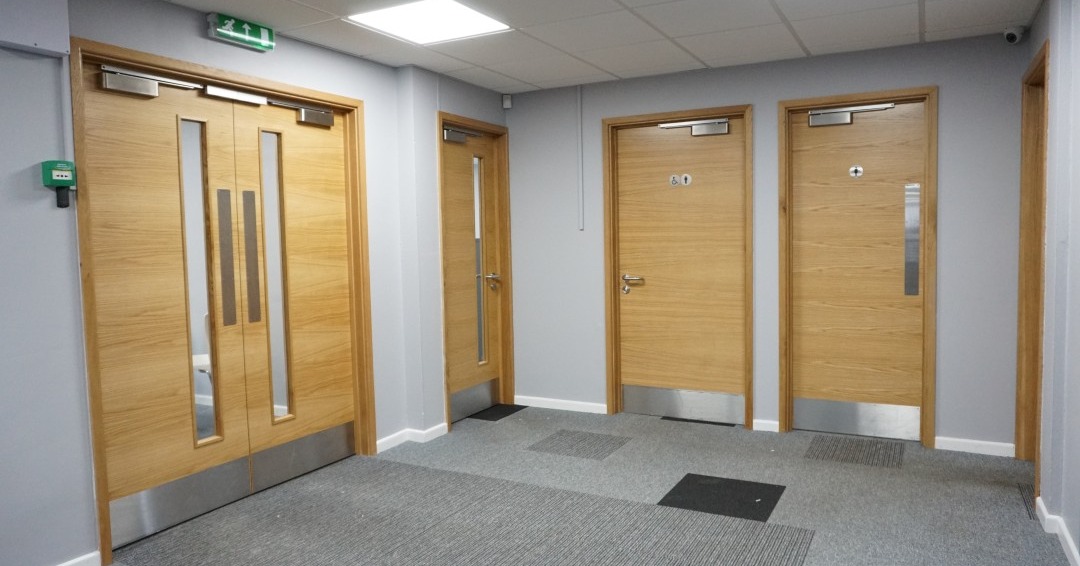
Checking for faulty fire door hinges or hardware is a key feature when assessing for fire door damage. Fire door hardware must be fire-rated and functional in accordance with the UK fire safety regulations in order to stay fire-resistant and maintain safety for individuals.
Faulty components of the fire door can prevent safe operation and will need to be replaced upon immediate finding, otherwise any missing or damaged parts will compromise the door, and it will need exchanging to prevent further fire door damage, damage to the building or any individuals.
Checking worn or loose fire door hinges may save a fire door from damage or replacement, and there is a simple way to do this. By inspecting the hinges, you will be able to see obvious signs or wear or deterioration through rust and missing screws. Fire doors should have at least three robust door hinges to hold it steady against the frame, and can all be checked by any property inspector or owner.
If left undealt with, damages to the fire door could exceed the limit and promote newer problems with the door, making it dangerous to users. The door could fall off, letting fire and smoke through, or could get stuck and prevent successful evacuations.
Another thing to check when inspecting for damage is any damaged fire door latches and locks on the door. You can easily inspect this by verifying that the self-closing devices operate smoothly, closing and opening the door when necessary. You can also ensure that the latch mechanisms engage securely upon closing. If they do not, you will need to repair or replace them immediately.
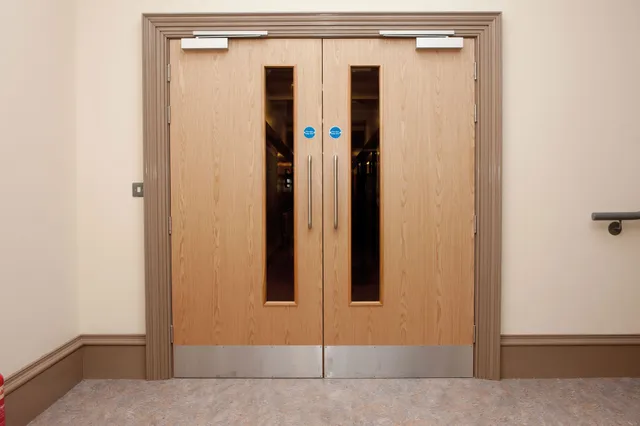
Failure to self-close a fire door safely results in active fire door damage. A fire door must be able to close fully and automatically to regulate cautionary smoke and flames in the event of a fire. If the door remains ajar, it will not provide any fire or smoke resistance and will put anyone close by in immediate danger. Self-closing devices must be checked by owners or inspectors routinely to ensure that they are capable and safe.
If a fire door sticks or fails to latch upon closing, it will spread fire and smoke to all inhabitants of the building. The way to check this is by checking the self-closing device to confirm that the latch engages without any manual assistance. If the door does not close easily or at all, the latch or self-closing device will need to be replaced to prevent any future fire damage to individuals and the property.
Disabled or misadjusted fire door closers are a massive problem during any evacuation. If the closers are disabled, they will not close the door and prevent any fire resistance. The way to check this is to inspect the closers for the correct tension and alignment with the frame.
For any property owners or safety personnel, you can achieve this by avoiding any door wedges beneath the door or obstructions in the doorway. Any door wedges may also create further issues in the future if they are used consistently, as they will create small leeway in the wood for smoke and flames to travel through if the door does need to close due to a fire.

Any fire door alterations without certification may lead to further fire door damage if left unaware for other door inspectors. Modifications to the fire door can void the fire-resistance rating. Drilled holes, any added windows or unauthorised fittings may reduce the performance of the safety of the door. You should always check for evidence of approved alterations, such as a window installation.
Any extra locks, bolts, or handles are considered unauthorised fire door furniture, used unnecessarily and weigh the door down. Alongside this, if only one of multiple parties know of the installation, it may cause danger; for example, if an extra lock is added to the door and one party is unaware, they may get trapped inside with no key or self-close machinery to operate it.
You must also verify that all hardware used, and door furniture equipped meets the fire-rating standards and requirements. For example, adding posters to the fire door will not only prevent fire-resistance, but also increase likelihood for the door to get weighed down and become unusable.
Fire door damage may occur due to the lack of compliant fire door glazing installations. Fire doors with vision panels must all use fire-rated glass to stick with the UK fire safety regulations, or else the door will become easily terminated and inaccessible during evacuation. Any improper glazing of a fire door will immediately compromise certification and need to be replaced; due to the danger it causes to individuals and the property.

Signs of poor fire door installation in any area of a fire door will promote excess fire door damage and necessary replacement. Installation errors will lead to long-term performance issues for any fire door and will need to be checked regularly or replaced to increase safety. Misaligned doors may not seal or close effectively if the fire door is installed incorrectly and may lead to multiple expensive fixes. In order to safely install a fire door, you need a professional to comply with UK fire safety regulations.
While ensuring there is improper installation, ensure that the door leaf and frame are flush and square. Misalignment usually appears in the form of uneven gap between the door and frame. When there are uneven gaps, this usually indicates poor workmanship and can prevent the fire door from sealing efficiently, reducing its ability in retarding fire and smoke.
It is also mandated to install the fire door frame in the surrounding wall properly. Loose or missing fixings will render the structural integrity of the fire door poor so that it will disintegrate when pushed. Loose fixings will weaken fire resistance and must be addressed instantly to prevent issues with the door in the future.

Certification labels must verify the fire rating of a fire door, such as FD30 or FD60. These labels are critical for proving compliance and confirming that the door has been manufactured and tested to meet fire safety standards. If any fire door labels become lost, damaged, or worn out, there is no assurance that the door provides the required level of protection. Without a visible and accurate label, the fire door damage cannot be trusted as compliant. The labels must always remain intact, fixed in place, and legible in order to confirm the fire resistance rating of the door.
When checking the fire door identification labels, check for peeling, scratching, or obscured markings. The fire door must bear the proper rating like FD30 or FD60, depending on how it’s classified. The fire rating will not be valid and the door must be checked more thoroughly or replaced if the labels are unclear.
If there is fire door label visible at all, it cannot be assured to be compliant. Without the evidence of its fire-resistance rating, the door becomes a danger to the property and the people within. Non-certified doors should be replaced or inspected right away by a professional in this situation.

By repeated use over time, a high degree of excessive fire door wear and tear is evident on the door. Its safety rating and capability of smothering smoke and flame are also compromised once neglect is evident. High-traffic areas have more exposed fire doors and need more frequent check-ups to ascertain if they still function as well as they should.
Scuffing, chipping, or abrasion of the fire door surface material must be inspected vigorously, due to daily usage. While surface damage could even seem negligible at times, it is capable of influencing the overall integrity of the door core. Go here any material loss decreases the fire door’s capacity for sufficient resistance and can call for repair or replacement.
Repetitive impacts of normal usage may loosen handles, hinges, and other hardware. Loose fittings reduce the overall structural strength of the fire door and may lead to failure in a crisis situation. All hardware must be periodically inspected to verify that it is secure and properly installed.

Environmental conditions can also affect the long-term performance of fire doors. Humidity exposure, temperature fluctuations, or chemicals can cause the breakdown of timber and metal components. The surrounding conditions must be closely monitored to prevent long-term damage to the fire doors.
In a timber fire door, moist damage is a significant issue and can lead to needing a replacement fire door. It can lead to swelling, mould, or rot marks that will compromise the stability of the fire door and even stop it from sealing properly against the frame. Affected timber must be repaired promptly to preserve the resistance of the door.
Metal parts on fire doors like hinges, closers, and latches should also be inspected for corrosion, otherwise it may lead to immediate replacement due to safety risks. Rust or visible degradation will weaken parts on the fire door, rendering them prone to failure in an emergency. Corroded parts should be repaired or replaced immediately to ensure the fire door performs as expected. If left not dealt with, the fire door will be unsafe for use under UK fire door regulations.

Here are SAB Group’s Ten Reasons You Need Fire Door...
View MoreWe’re here to help! Get in touch today – let's make your premises compliant

Call Us

Email Us

Address
Head Office:
SAB Group, Ground Floor, Vanquish House, Wellesley Road, Tharston, Norwich, NR15 2PD.
Workshop:
Richmond Close, Honingham, Norwich, Norfolk. NR9 5BP
